



- Find the best broker for your trading needs
- Compare spreads, fees, and platforms
- Read in-depth reviews and analysis

Page Navigation


Select a different country or region to view content tailored to your location.

FxScouts helps traders across the globe by meticulously testing and reviewing online brokers and providing Forex education and market analysis. Our partners compensate us through paid advertising. While partners may pay to provide offers or be featured, they cannot pay to alter our recommendations, advice, ratings, or any other content. Our content and research teams do not participate in any advertising planning nor are they permitted access to advertising campaign data. For more detailed information click this link.

Alison Heyerdahl is the Head of Content at FxScouts, a Chartered Market Technician (CMT), and an experienced trader, as well as a financial writer with extensive expertise in Forex trading, broker analysis, and market research. She has reviewed 100+ brokers, publishes weekly YouTube trading videos, and co-hosts the “Let’s Talk Forex” podcast.

Alison Heyerdahl is the Head of Content at FxScouts, a Chartered Market Technician (CMT), and an experienced trader, as well as a financial writer with extensive expertise in Forex trading, broker analysis, and market research. She has reviewed 100+ brokers, publishes weekly YouTube trading videos, and co-hosts the “Let’s Talk Forex” podcast.
Chris manages the relationships with our partners to provide the best Forex trading experience possible for our users. Chris has 15+ years of research, and editorial and design experience for political and financial publications. His background has given him a deep understanding of international financial markets and the geopolitics that affect them.
Low-spread brokers are essential for traders who want to reduce their trading costs. Whether you’re scalping, day trading, or just executing high-volume trades, brokers with tight spreads can significantly improve your profitability.
While low-spread brokers can reduce trading costs, they often rely on alternative revenue sources, such as commissions, to offset their tighter pricing and may not suit every trading strategy. In this guide, we explain how these brokers operate, explore the pros and cons of low-spread accounts, and compare the best options available to Kenyan traders based on average spreads, commission structures, trading platforms, and CMA regulation.
Trusted. Transparent. Tested.
For over a decade, we’ve set the standard in forex broker reviews—collecting thousands of data points yearly to deliver unbiased, expert-backed insights.
Skip the trial and error! Below, you’ll find the best forex brokers for Kenyan traders for 2026—thoroughly tested, verified, and ranked, so you can trade with confidence.

In Kenya, the Capital Markets Authority (CMA) licenses and supervises retail Forex brokers, making sure they follow rules that protect traders and promote transparency. Choosing a CMA-regulated broker helps ensure that advertised low spreads are genuine and not offset by hidden costs.
Why CMA regulation is essential when selecting a low-spread broker:
Tip: Tight spreads are appealing, but always confirm a broker’s CMA authorisation. Many Kenyan traders also use offshore brokers regulated by authorities like the FCA, ASIC, or CySEC. However, if your account is opened under an offshore entity, certain protections—such as negative balance protection or compensation schemes—may not apply.
Swipe to scroll
Broker | Visit Broker Website | Account Name | Trading Cost Raw Spread Account: Total trading cost at the time of last update, for 1 lot of EUR/USD. Includes spread and commission. | Min. Deposit The minimum deposit required to trade using the selected account | Trading Commission | Compare | ||
|---|---|---|---|---|---|---|---|---|
 | cTrader Razor | USD 7 | USD 0 | 6 USD / lot | 0.10 pips | |||
 | Zero | USD 7 | USD 0 | 6 USD / lot | 0.10 pips | |||
 | Pro Raw Spread MT4 | USD 7 | USD 200 | 7 USD / lot | 0 pips | |||
 | RAW - MetaTrader | USD 7.20 | USD 200 | 7 USD / lot | 0.02 pips | |||
 | Raw | USD 7 | USD 100 | 6 USD/lot | 0.10 pips | |||
 | XM Ultra Low | USD 1 | USD 5 | Spread Only | 0.60 pips | |||
 | Pro Account | USD 0 | 0 | 0.00 pips | ||||
 | Zero | USD 4.50 | AUD 0 | 4.5 USD/lot | 0 pips | |||
 | FxPro cTrader | USD 11 | USD 100 | 7 USD/ lot | 0.40 pips |









Select another broker to another broker to compare features, fees, and platforms side by side.
Find Your Ideal Forex Broker
Select another broker to another broker to compare features, fees, and platforms side by side.
0 pips
CMA, BaFin, ASIC, FCA, CySEC
USD 0
Pepperstone Platform, TradingView, cTrader, MT5, MT4
400:1
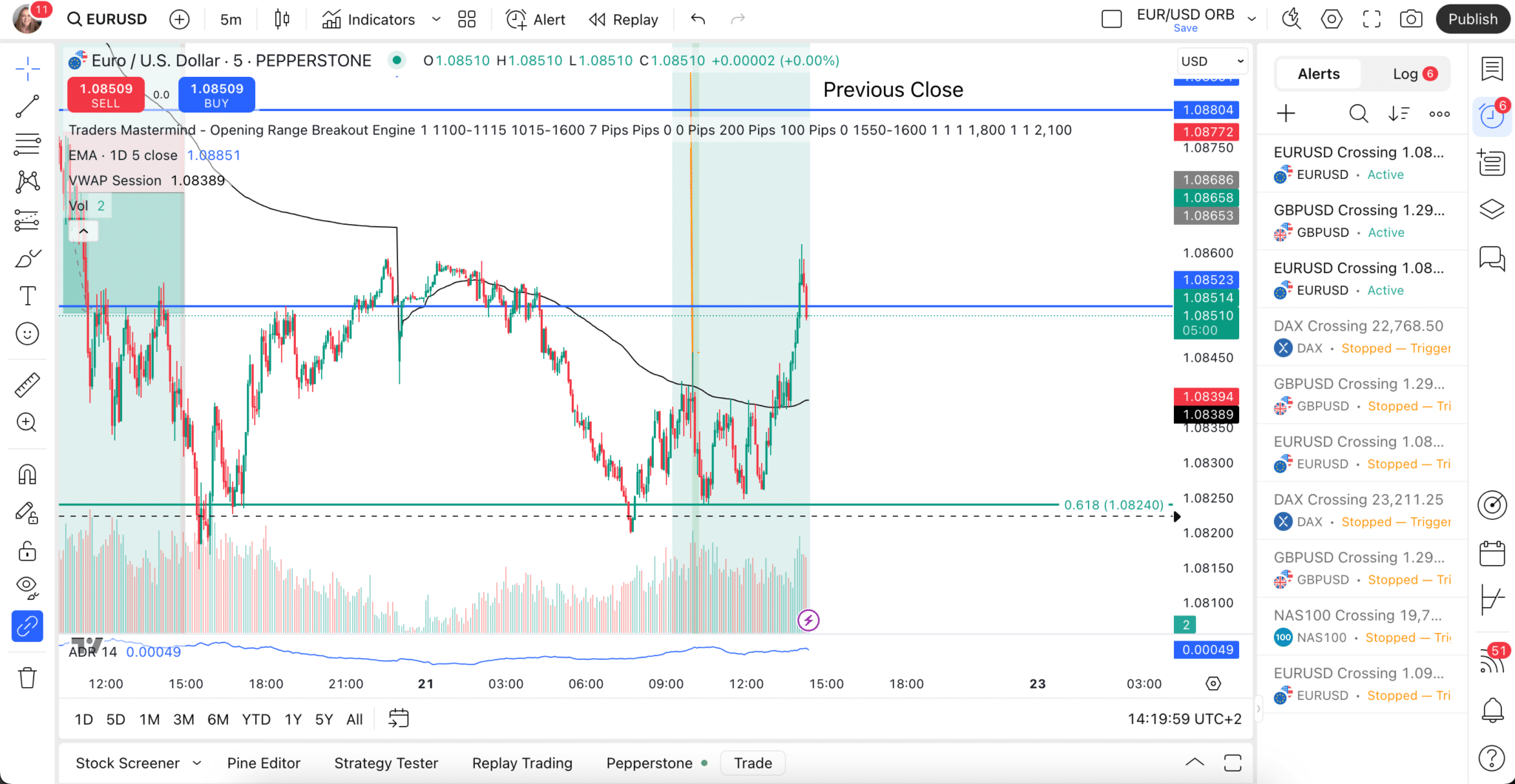
Pepperstone consistently delivers ultra-low spreads on EUR/USD, often averaging 0.1 pips during peak hours
True ECN pricing model ensures no markup on spreads and minimal slippage, ideal for scalping and day trading
Competitive commission structure with no hidden fees, optimised for volume traders
Supports M-Pesa deposits and withdrawals for faster transactions tailored to Kenyan clients
Pepperstone does not offer deposit bonuses, which some beginners might expect
The commission structure changes depending on your base currency and trading platform
Pepperstone | Best for: Kenyan traders seeking institutional-grade spreads and ECN-like execution without markup

FxScouts
 YouTube
Select another broker to another broker to compare features, fees, and platforms side by side.
0.0 pips
FSA-Seychelles, FSC, DFSA, FSCA, FCA, CySEC
USD 0
HFM Trading App, MT5, MT4
400:1
Offers 0.0 pip spreads on major pairs with $3 per lot per side commission, suitable for cost-conscious traders
HFM has a dedicated regional office in Nairobi offering seminars and customer support
Start with as little as $5, making it ideal for beginners wanting low-cost exposure
Access to Autochartist, VPS, and exclusive market analysis to support decision-making
Traders not using Zero account may face less favorable costs
STP execution on Micro accounts may cause minor delays
HFM | Best for: Traders in Kenya who want tight spreads with lower capital requirements and local support
FxScouts
YouTube
Select another broker to another broker to compare features, fees, and platforms side by side.
0.1 pips
CMA, FSA-Seychelles, FSC, B.V.I FSC, FSCA
USD 3
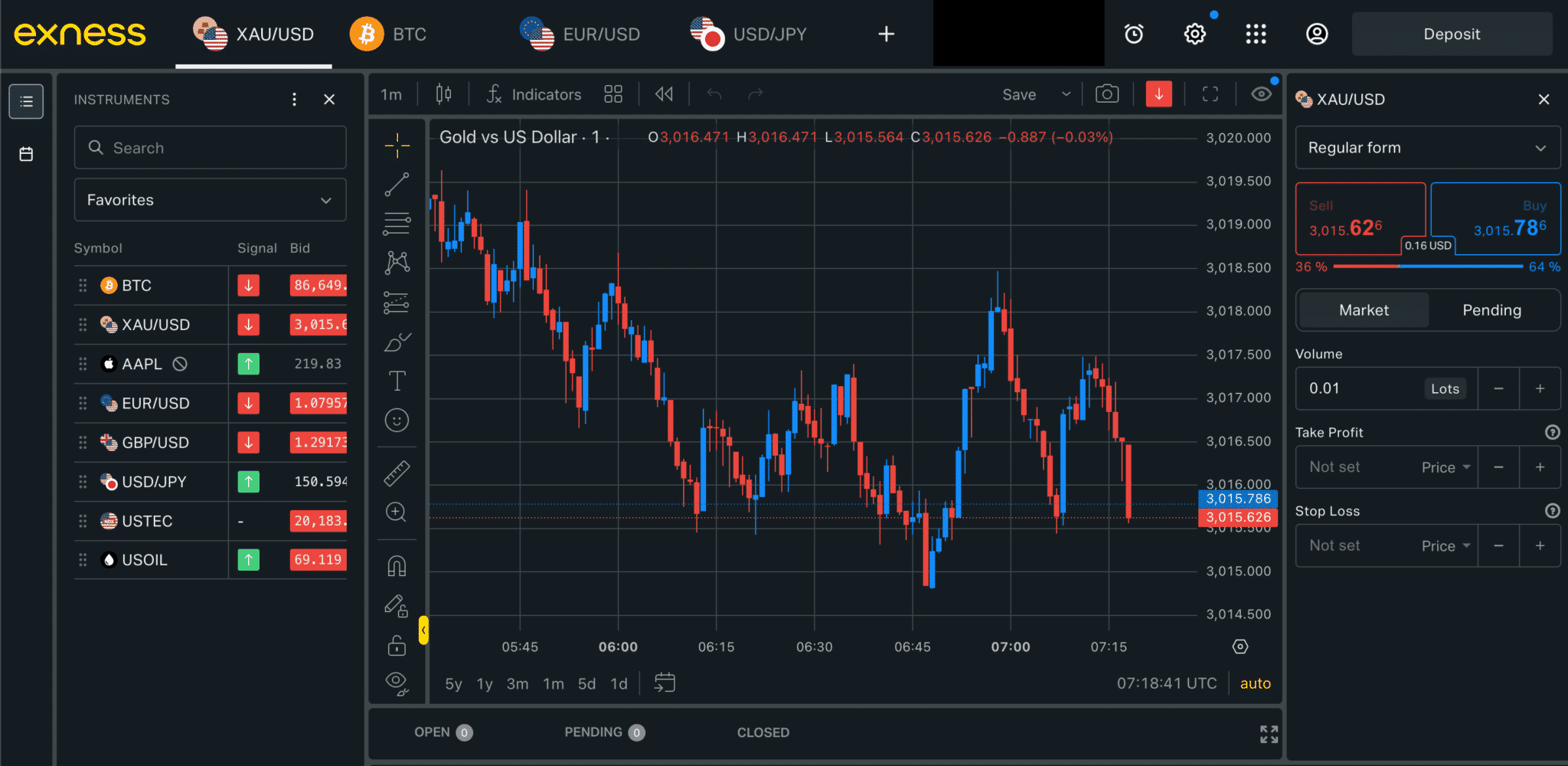
Exness Terminal, MT5, MT4
Unlimited:1
Minimal spreads on major FX pairs, with commission starting from $0.2 per lot
Supports 24/7 automatic payouts in Kenya through MPesa with no manual approval
Advanced traders can scale positions with flexible margin requirements
View actual live spreads on Exness website without logging in
Beginners start with capped leverage and must qualify over time
All spreads are variable and may widen during news
Exness | Best for: Traders who want low-cost trading with customizable leverage and near-instant withdrawals in Kenya
FxScouts
YouTube
Select another broker to another broker to compare features, fees, and platforms side by side.
0.1 pips
FSA-Seychelles, SCB, ASIC, CySEC
USD 200
TradingView, cTrader, MT5, MT4
500:1
Lowest average spreads on EUR/USD (0.1 pip) verified by Myfxbook
Best-in-class infrastructure ideal for scalping and HFT
True market depth is available through the MT5 and cTrader platforms
Diversify beyond FX while maintaining a tight cost structure
Kenyans must use Skrill, bank wire, or card, which may take longer
Higher barrier to entry for beginners
IC Markets | Best for: Professional Kenyan traders needing raw spreads with ultra-fast execution
FxScouts
YouTube
Select another broker to another broker to compare features, fees, and platforms side by side.
0.0 pips
LFSA, FSA-Seychelles, FSCA, FCA, CySEC
USD 100
TradingView, MT5, MT4
500:1
Standard commission at $2 per lot per side — cheaper than most ECN brokers
London-based servers deliver efficient fills and low latency
New traders can test strategies or use swap-free account without extra costs
Enhanced fund protection and transparent policies
No proprietary trading app, which may limit feature access
Only international options like Skrill, Neteller, or bank cards

Tickmill | Best for: Cost-sensitive Kenyan traders looking for consistent spreads and low commission
FxScouts
YouTube
Select another broker to another broker to compare features, fees, and platforms side by side.


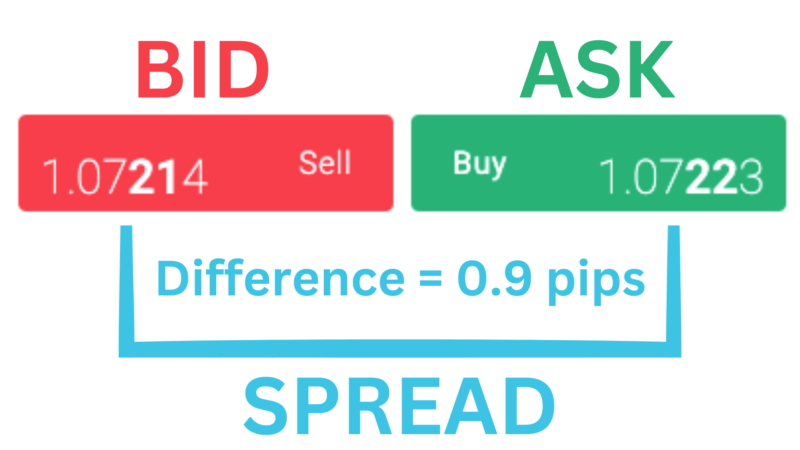
The spread is the difference between a broker’s buy and sell prices, and it’s a key cost of Forex trading. This guide explains how spreads work, why low spreads matter, and how brokers still profit when offering tight or zero spreads.
The spread is the difference between the broker’s buy and sell prices when trading a Forex pair.
In other words, the spread is the difference between the bid price (the price at which you can sell) and the ask price (the price at which you can buy). Brokers charge spreads as a fee for enabling the trades. In a typical trading environment, spreads vary depending on market conditions, the liquidity of the currency pair, and the broker’s pricing model. While major currency pairs, such as EUR/USD or USD/JPY, tend to have tighter spreads due to high liquidity, exotic pairs like USD/KES usually have wider spreads.
Understanding the spread is one of the first and most important concepts in Forex trading. The tighter the spread, the less price movement is required for a trade to become profitable.
Most Forex brokers generate revenue either through spreads or commissions. A broker that offers low or zero spreads typically compensates for this by charging a fixed commission on each trade. These commissions are usually calculated per traded lot and can range from US$3 to US$7 per round turn (opening and closing a position).
For example, a broker might offer a 0.0 pip spread on EUR/USD but charge a commission of 6 USD per lot traded. This pricing model is commonly used by ECN (Electronic Communication Network) or STP (Straight Through Processing) brokers, who pass client trades directly to liquidity providers without intervention. The commission can be seen as a fee for the broker’s service of facilitating the trade. For a broker offering low or even zero spreads, the commission may be their primary source of income.
The commission-based model offers more transparent pricing, especially for Kenyan traders comparing different brokers side by side. But it also means that the total trading cost is not always obvious at first glance, particularly for newer traders.
Each broker has a different cost structure, but low-spread Forex brokers typically share some common characteristics. Let’s look at the benefits and drawbacks.
Ultimately, whether a low-spread account is the right choice depends on your trading frequency and style. Scalpers and day traders usually benefit the most, while swing traders may find a commission-free account with wider spreads to be more cost-effective.

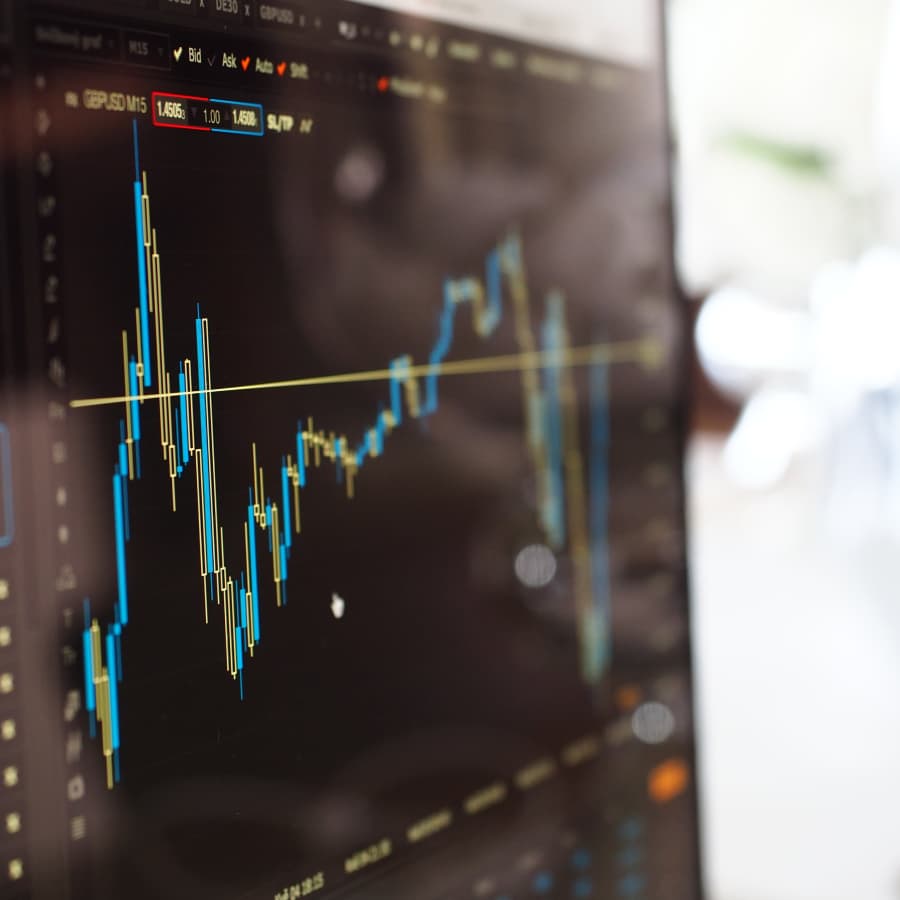
Fixed spread brokers offer spreads that do not change, no matter the market conditions, whereas variable spreads could be lower, but fluctuate throughout the trading day.
In Forex trading, the difference between fixed spreads and variable spreads is important when deciding which broker to trade with. Here’s a breakdown of the main differences:
The choice between fixed and variable spreads depends on a trader’s strategy, trading style, and risk tolerance. Fixed spreads offer predictability and simplicity, which can be beneficial for beginners or those with straightforward strategies. Variable spreads, on the other hand, can offer lower costs under normal market conditions and are preferred by traders who can manage the risks associated with market volatility.
In Kenya, most CMA-regulated brokers offer variable spreads. Traders who are comfortable with some volatility in costs and who monitor news releases carefully may benefit from lower average trading costs with variable spreads.


Find answers to common questions about low-spread Forex brokers, including what is considered a low spread, why they matter, and the differences between raw spread and standard accounts.
In the world of Forex trading, a spread is considered low if it’s close to 0.0 pips. However, what constitutes a ‘low’ spread can depend on the currency pair being traded. For major currency pairs like EUR/USD, a low spread is typically anything under 1 pip. For less liquid currency pairs, such as minors or exotics like the USD/KES, spreads are usually considerably wider.
Commission rates can vary widely among Forex brokers, but a low commission is typically considered to be around 0.1% – 0.3% of the trade volume. In terms of fixed commissions, which are more common in ECN or STP brokers, anything around $6 – $10 per lot traded (100,000 units of currency) could be considered low.
A zero-spread account is a type of trading account in which the spread between the bid and ask prices is set to zero, at least for certain currency pairs, under specific market conditions. In a standard trading account, the spread can fluctuate depending on market volatility, liquidity, and the broker’s pricing model. Most brokers make money from these spreads. But with a zero-spread account, brokers usually charge a fixed commission per trade instead.
Yes, some brokers offer zero-spread accounts. Zero-spread forex brokers offer trading accounts where a currency pair’s bid and ask price are the same. This means there is no difference between the bid price and the ask price of a currency pair. However, it’s essential to note that while the spread is zero, these brokers often compensate by charging a commission on trades or using other fee structures. Therefore, traders must understand the overall cost of trading, not just the spread, before choosing a broker.
While low-spread accounts can save costs for high-volume traders, they might not be as beneficial for less active traders. This is because the commission costs could outweigh the benefits of low spreads for traders who don’t trade frequently.
The broker with the tightest spread is not constant, as spreads fluctuate based on market conditions and the broker’s policies. However, brokers that consistently offer tight spreads often operate using an Electronic Communication Network (ECN) or Straight Through Processing (STP) model.
A standard account typically includes all trading costs within the spread. This means you won’t pay a separate commission on your trades. On the other hand, a raw spread account usually offers spreads close to zero, with brokers charging a separate commission on each trade. The choice between the two often depends on the trader’s strategy and volume of trades.
The most heavily traded pairs, such as the EUR/USD, GBP/USD and USD/JPY, normally have the lowest spreads, while an emerging-market currency paired with the USD, such as the USD/KES, will have a wider spread. In other words, the more liquid the market, the narrower the spread. That’s because the high volumes traded generate substantial profits for brokers, even though the profit margins may be narrow.
Explore more resources that fellow traders find helpful! Check out these other guides to enhance your forex trading knowledge and skills. Whether you’re searching for the best brokers, educational material, or something more specific, we’ve got you covered.

Discover the top Forex brokers for Kenyan traders. Compare top platforms, fees and features to make an informed trading choice.

Compare the best Forex trading platforms for 2026, including MT4, MT5, cTrader, and TradingView. Find the right tools to enhance your trading experience.

What is Forex trading and how does it work? An easy-to-read guide including how to trade, and how to choose a reliable broker.
60-90% of retail traders lose money trading Forex and CFDs. You should consider whether you understand how CFDs and leveraged trading work and if you can afford the high risk of losing your money. We may receive compensation when you click on links to products we review. Please read our advertising disclosure. By using this website, you agree to our Terms of Service.
Partner Manager and Financial Writer
Head of Content
Financial Writer




Welcome to the FxScouts community! We’re thrilled to have you on board. You’ve successfully signed up for our forex newsletter, where you’ll receive expert insights, market analysis, and the latest news straight to your inbox.
Get ready to stay ahead of the curve with our regular updates designed to help you make informed trading decisions.
Happy trading!
The FxScouts Team